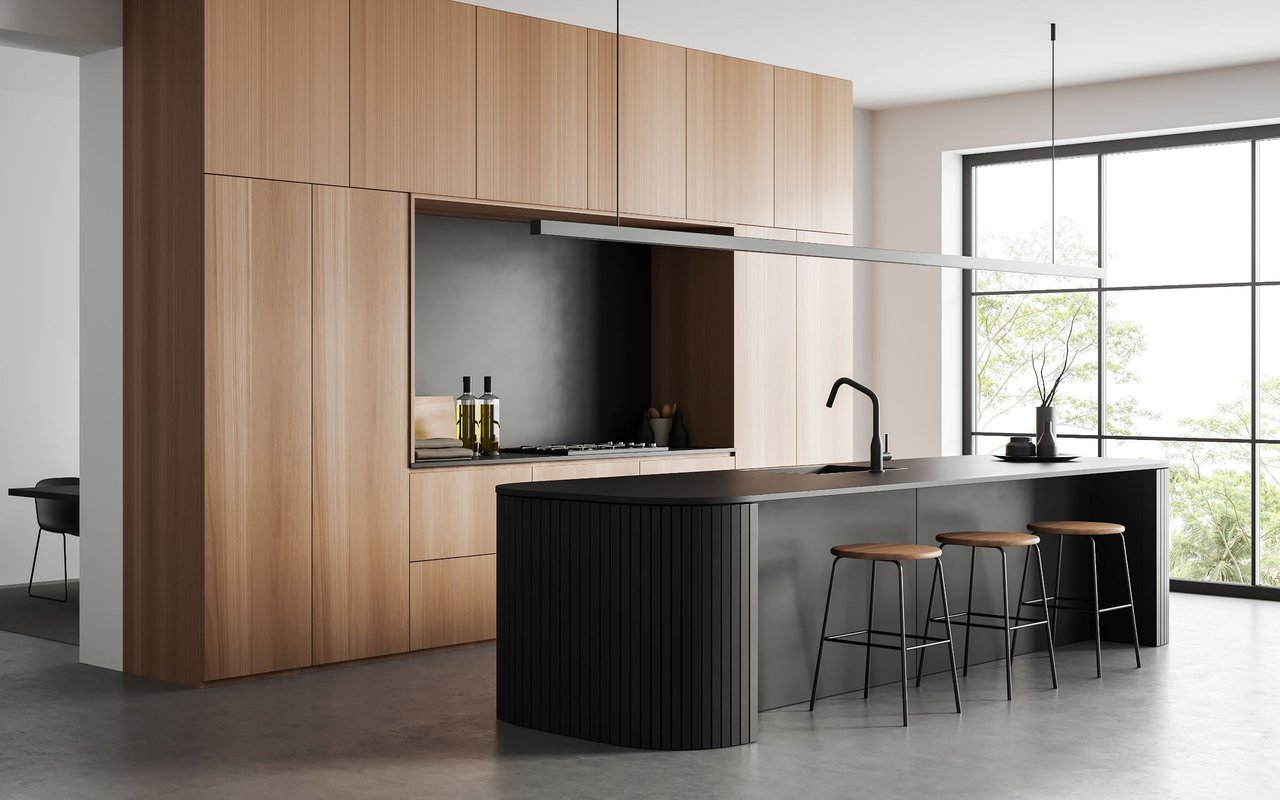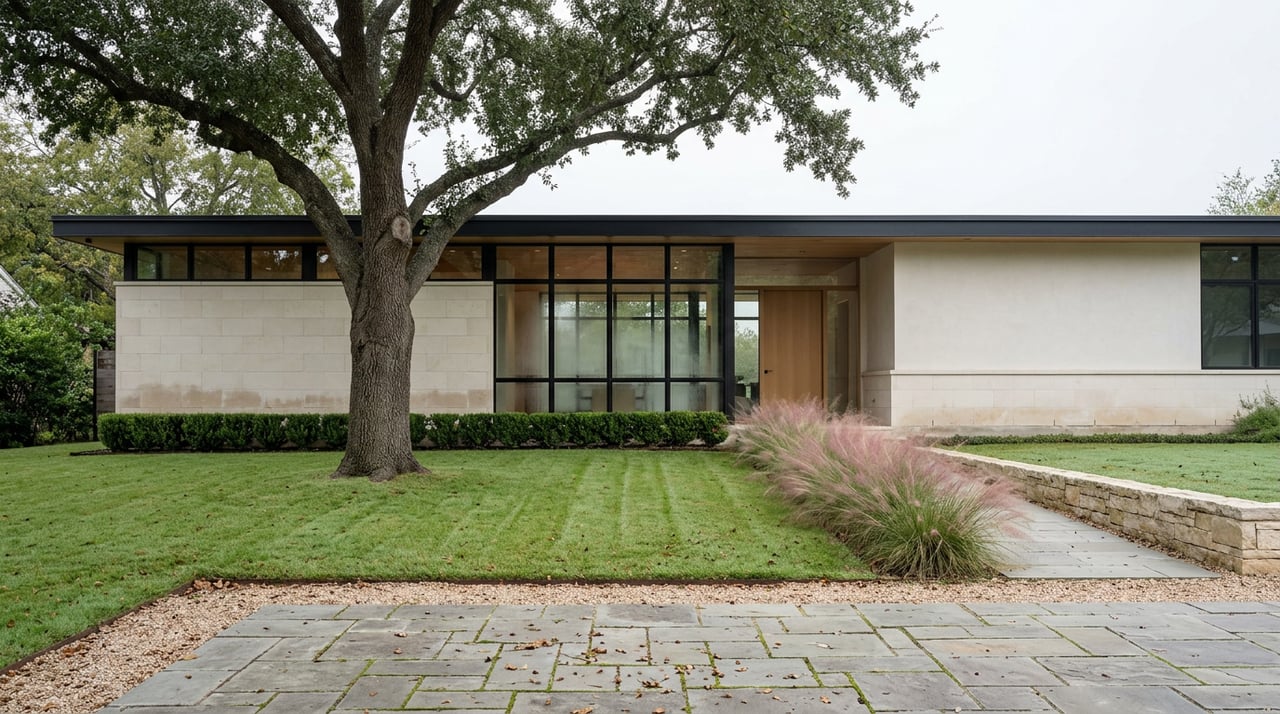
Picture two houses on the same block in Preston Hollow. Same era, same lot size, same mature oak canopy out front. One sells for $500,000 more than the other, and it's not the kitchen, the pool, or the foundation that explains the gap. It's a school district boundary that runs through the middle of the neighborhood instead of around it, and it doesn't care where the property line falls.
That single fact should reset how you read every Preston Hollow listing you've scrolled past. The median price for this neighborhood gets quoted constantly, in Realtor bios and market reports and Dallas luxury round-ups, as if it describes one place. It doesn't. Preston Hollow is at least four different markets stacked under one name, and the biggest lever on price isn't the one most buyers are watching.
The Boundary Doesn't Follow the Street Grid
Most of Preston Hollow sits inside Dallas ISD. A pocket in the southeastern section, closest to the Park Cities, sits inside Highland Park ISD instead. That HPISD slice gives residents the same school pipeline as Highland Park and University Park families: University Park Elementary or Hyer Elementary, then McCulloch Intermediate, then Highland Park Middle and Highland Park High School.
The line separating that pocket from the rest of the neighborhood isn't intuitive. Homes on the same street can sit in different districts, and agents who work this market consistently point to a premium of $200,000 to $500,000 or more for an HPISD-zoned Preston Hollow address over a comparable Dallas ISD-zoned home nearby. That's not a renovation premium or a lot premium. It's a boundary premium, and it shows up whether the house is a 1960s ranch or a new custom build.
If you're touring Preston Hollow with school access as a priority, the address matters more than the listing photos. Verify the exact attendance zone for any property before you fall in love with it, because the line runs through blocks, not around them.
Four Markets Wearing One Address
Once you separate school zoning from the picture, Preston Hollow still isn't one market. It's closer to four, each with its own logic:
| Tier | Typical lot | Rough price band | Character |
|---|---|---|---|
| Old Preston Hollow, Volk Estates, Strait Lane | 0.5 to 10+ acres | $10M to $50M+, with the most exclusive Strait Lane estates trading from $20M to over $100M | Legacy compounds, deep setbacks, frequent off-market sales |
| Standard estate tier | 1 to 3 acres | $3M to $10M | The bulk of what gets called "luxury Preston Hollow" |
| Sub-acre interior | Under an acre | Roughly $1M to $3M | The most active segment by transaction volume |
| North and West Preston Hollow | Standard suburban lots, Dallas ISD only | Roughly $600,000 to $800,000 entry point | The way into the address without the estate price tag |
That entry-level tier matters for context. Highland Park's entry floor runs closer to $1.5 million, and University Park starts near $700,000. Preston Hollow's northern and western sections open a real path into the neighborhood well under a million dollars, provided you're comfortable with Dallas ISD zoning rather than Highland Park ISD.
Strait Lane, sometimes called Billionaire's Row, sits at the opposite end of that spread. It's the corridor that has historically drawn former presidents, Fortune 100 executives, and professional athletes to Dallas, and transactions there rarely show up on public listing sites at all. They move through private networks, which means the "median" you see quoted for Preston Hollow almost never captures what's actually happening at the top of the market.
Why the Price Tag Reads Like Highland Park's and Isn't
Here's where the comparison gets genuinely useful. In early 2026, Preston Hollow's price per square foot ran somewhere in the $336 to $458 range depending on the exact month and data source, while Park Cities figures for the same stretch of time ran from about $628 to $688 per square foot. Total sale prices in both neighborhoods land in a broadly similar band, often in the low-to-mid millions.
That's the paradox. If the homes cost about the same, why does one price out at roughly twice the per-square-foot rate of the other?
The answer is land, not finish quality. Highland Park and University Park sit on tighter, smaller lots by design, so buyers there are paying a premium for interior square footage and municipal identity. Preston Hollow's parcels run larger, frequently a half acre or more and often well beyond that in the estate sections, so the same total dollar amount buys more dirt and less price concentration per square foot of house.
For a buyer, that math cuts both ways. If your priority is square footage and finish level, Park Cities pricing tells you what you're actually paying for. If your priority is a pool, a sport court, a guest house, or simply distance from the next roofline, Preston Hollow's lower price-per-square-foot number is doing exactly what it should: stretching your budget across land instead of drywall.
The Blocks Where You're Buying the Lot, Not the House
On certain Preston Hollow blocks, particularly where the original 1920s-era housing stock still stands, agents and appraisers treat a specific kind of sale as its own comp category: a buyer purchasing an older home almost entirely for its lot, with the existing structure serving as a placeholder until demolition and rebuild permits clear.
One example from the public record is a 10,038-square-foot home on 0.82 acres in Mayflower Estates. That's not an isolated case. It's common enough on some blocks that the land, not the structure, sets the price.
If you're evaluating a Preston Hollow property with a teardown mindset, the comp set you need isn't "recent Preston Hollow sales." It's recent lot-value sales specifically, on comparable zoning, in the same pocket. Dallas permitting requirements and floodplain status matter too in evaluating the site.
The neighborhood is also still adding new context at its edges. Preston Hollow Village, a 42-acre mixed-use development at Walnut Hill Lane and North Central Expressway, brought a Trader Joe's, an Orange Theory, several restaurants, and three eight-story residential buildings totaling 526 units in its first phase. It sits at the northern edge of the neighborhood and hasn't touched zoning on the estate streets, but it's added walkable retail options that didn't exist here a few years ago.
What This Means If You're Comparing Preston Hollow to the Park Cities
- Confirm the school district for the exact address, not the general area. The HPISD/DISD line runs through Preston Hollow rather than around it, and that line is worth more to your resale value than most renovations.
- Compare price per square foot within the same pocket, not across the whole neighborhood. Old Preston Hollow, the standard estate tier, the standard sub-acre tier, and the North/West entry tier behave like four separate markets.
- If you're eyeing an older home with a large lot, ask whether the relevant comps are house sales or land sales. On some blocks, the structure is close to irrelevant to the number.
- Weigh land against finish deliberately. Preston Hollow's lower per-square-foot pricing reflects lot size, not lower quality, and Park Cities' higher per-square-foot pricing reflects density, not necessarily better construction.
FAQ
Is all of Preston Hollow zoned to Highland Park ISD? No. The majority of the neighborhood is zoned to Dallas ISD. A pocket in the southeastern section, generally closer to the Park Cities, falls inside Highland Park ISD boundaries. Confirm zoning for any specific address before writing an offer.
Can I still build new construction or a teardown in Preston Hollow? Teardown-and-rebuild projects are common given the age of some of the original housing stock, though permitting requirements and floodplain status may matter for a particular site.
Why does Preston Hollow's price per square foot look lower than Highland Park's if total prices are similar? It comes down to lot size rather than home quality. Preston Hollow's larger parcels spread a comparable total price across more land, which compresses the per-square-foot number even when the sale price itself sits in the same range as a Park Cities home.
If you're weighing Preston Hollow against Highland Park, or trying to figure out which side of an invisible line a specific address falls on, that's exactly the kind of detail worth getting right before you tour, not after you've made an offer. Alex Maloney works these comparisons block by block across North Texas. Let's Connect.
This article is general information, not legal, tax or financial advice. Consult a qualified professional about your situation.